Best Brain Supplements for Memory: A 2026 Buyer's Guide
What are the best brain supplements for memory in 2026?
The best brain supplements for memory in 2026 are the ones built on ingredients tested at the doses research actually used — citicoline, phosphatidylserine, magnesium L-threonate and bacopa lead that list. Expect modest, gradual gains, mostly in older adults, not overnight genius, and treat any dementia-prevention promise as a red flag.
- Citicoline at 250–500 mg has the strongest working-memory evidence of the common ingredients.
- Effects build over weeks — bacopa needs 8–12 weeks before anything shows.
- A published, per-ingredient dose beats any proprietary blend that hides its numbers.
Why "best" has to mean "best-dosed"
Type "best brain supplements" into a search bar — something roughly 6,600 people do every month — and you get a wall of confident rankings, most of which quietly avoid the only question that matters. It is not which ingredient a product contains. Nearly every memory formula on the shelf contains the same short cast of ingredients. It is how much of each it contains, and whether that amount has anything to do with the amount used in the studies the marketing cites.
This is the trick the whole category runs on. A trial finds that 300 mg of bacopa monnieri, taken daily for twelve weeks, produces a small improvement on a memory test. A product puts "bacopa monnieri" on its label, in an undisclosed amount inside a proprietary blend, and borrows the credibility of the study without matching its dose. The word on the panel is real. The number behind it is the whole story, and it is usually missing. So the honest way to rank the best brain supplements for memory is to rank the ingredients by evidence first, attach the dose each was studied at, and then ask which finished products actually deliver those amounts in the open.
One more piece of honesty up front, because it shapes everything below. The benefits here are real but modest, and they cluster in a specific group: older adults who have started to notice ordinary age-related slips. In healthy young people chasing an edge, the evidence is far thinner. Nothing in this guide "prevents", "treats" or "reverses" any disease, and any product that implies otherwise has told you something important about how it does business.
How we ranked the best brain supplements
Three filters, applied in order. First, does the ingredient have human evidence for memory or cognition, not just a plausible mechanism in a petri dish? Second, what dose produced the effect, and is that dose realistic to deliver in a daily capsule? Third — the filter that fails most products — does the finished formula disclose the amount of that ingredient, per serving, on the label? An ingredient can clear the first two filters and still be worthless in a given bottle if the bottle contains a fraction of the studied dose. With that method, here is how the leading memory ingredients stack up in 2026.
| Ingredient | Studied daily dose | Best evidence for | Time to effect |
|---|---|---|---|
| Citicoline (CDP-choline) | 250–500 mg | Working memory, attention | Weeks |
| Phosphatidylserine | 100–300 mg | Age-related memory complaints | Weeks to months |
| Magnesium L-threonate | 1,500–2,000 mg | Cognitive-age estimates in older adults | ~6 weeks |
| Bacopa monnieri | 300 mg (standardised) | Memory acquisition & recall | 8–12 weeks |
| Ginkgo biloba | 120–240 mg | Mixed; some older-adult signal | Weeks to months |
1. Citicoline — the strongest single line
Citicoline (also sold as CDP-choline) is the ingredient we would put at the top of a 2026 list, because it has the most consistent human evidence for working memory and attention, and because its studied dose of 250 to 500 mg is small enough to actually fit in a capsule at full strength. It supplies the raw material for acetylcholine, the neurotransmitter most tied to memory formation, and for the phospholipids that build cell membranes. It is the rare case where the mechanism and the trial data point the same way. If a formula includes citicoline at 250 mg or more and says so, that is a genuine mark in its favour. We go deeper on the numbers in our breakdown of citicoline dosage and its memory benefits.
2. Phosphatidylserine — modest, but honestly dosed
Phosphatidylserine is a phospholipid concentrated in nerve-cell membranes, and it is one of the few ingredients that regularly appears in commercial formulas at close to its studied amount of 100 to 300 mg. The evidence is real but limited, and strongest in older adults with existing memory complaints rather than in healthy young people. It even holds a carefully hedged qualified health claim in the United States — which tells you both that there is evidence and that the evidence is preliminary. We laid out exactly why phosphatidylserine is usually the one ingredient at a real dose in a dedicated piece.
3. Magnesium L-threonate — the 2026 talking point
This is the form of magnesium that actually raises magnesium levels in the brain, unlike the cheap oxide and citrate forms most multivitamins use. A 2026 randomised trial gave older adults 2,000 mg per day for six weeks and reported a striking result: an improvement in cognitive-age estimates of roughly 7.5 years versus placebo. That is a single trial and the "cognitive age" measure needs replication before anyone gets carried away, but it is the most interesting new signal in the category. The catch is the dose — at 1,500 to 2,000 mg it is bulky, so a formula that includes it at a token amount is missing the point entirely.
See a label that shows its numbers
MindRemember publishes all seven of its actives with a stated dose each, and we compare every one against the amount used in human trials — including where it falls short. No proprietary blend, nothing hidden inside a single total.
See the Official Store4. Bacopa monnieri — real, but only if you wait
Bacopa has a respectable trial record for memory acquisition and recall, but it comes with a condition most buyers never hear: it needs 300 mg of a standardised extract taken daily for eight to twelve weeks before the effect appears. There is no acute dose, no day-one lift. People who quit at three weeks conclude it does nothing; people who read the trial protocol know they quit too early. We walk through the exact amounts researchers used in our comparison of the bacopa and ginkgo doses that clinical trials actually used.
5. Ginkgo biloba — popular, mixed, and not risk-free
Ginkgo is the most famous memory herb and the most oversold. The human evidence is genuinely mixed: some older-adult studies show a small signal, large prevention trials showed nothing, and the standardised dose is 120 to 240 mg. It also mildly thins the blood, which matters if you take anticoagulants or face surgery. It earns a place on the list for completeness, not for star billing.

Three myths that sell the wrong products
Once you rank by dose, a lot of best-seller marketing starts to look different. Three myths do most of the damage.
Myth one: a longer ingredient list is a better product. The opposite is usually true. There is a fixed amount of powder that fits in a capsule. Split it across twelve "clinically studied" ingredients and each one lands at a fraction of its studied dose — a phenomenon the industry politely calls fairy dusting. A short list at full doses beats a long list at token ones every single time. When you cannot see the individual amounts, assume the worst, because a company proud of its doses prints them.
Myth two: if it worked in a study, it will work fast for me. Almost nothing here is acute. Citicoline, phosphatidylserine, bacopa and magnesium L-threonate all build over weeks. The one ingredient people feel quickly — caffeine — is not a memory ingredient at all; it is a wakefulness drug that improves scores mostly by making tired people less tired. Confusing "I feel something" with "my memory improved" is how a lot of stimulant-heavy blends earn undeserved reviews.
Myth three: memory supplements protect against dementia. This is the claim that gets companies in trouble, and rightly so. The Federal Trade Commission famously acted against the marketing behind Prevagen over memory claims that regulators judged unsupported. No dietary supplement is approved to prevent, treat or cure dementia or any other disease, and a formula that leans on that fear is telling you it has run out of honest arguments. Modest support for ordinary, age-related forgetfulness is the honest ceiling of this category.
Where MindRemember fits — the honest version
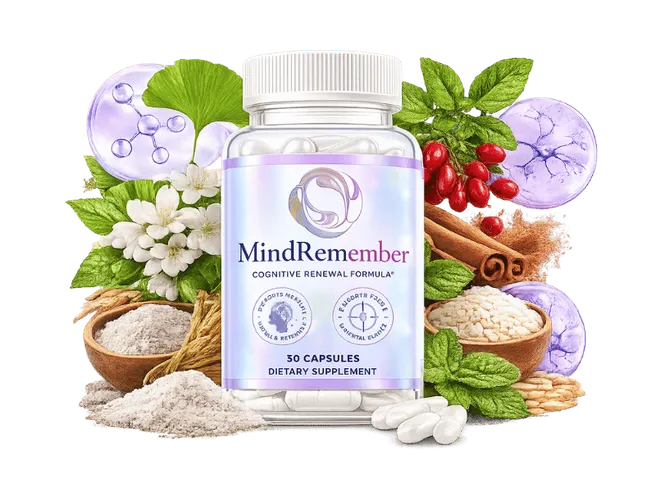
We cover MindRemember, so applying our own filters to it is only fair. The formula's advantage is transparency: seven named actives, each with a stated dose, which already puts it ahead of any hidden-blend competitor. Its phosphatidylserine sits at 125 mg — squarely inside the studied range, and genuinely one of the strongest single lines on the label. Its bacopa and ginkgo are present as named botanicals.
The honest caveats matter just as much. MindRemember does not contain citicoline or magnesium L-threonate, the two ingredients we rate most highly above, so it is not a way to get those. Its alpha-GPC is present at a token 5 mg, far below any studied amount. And the largest ingredient by weight is St John's wort, which carries a long list of interactions with prescription medicines — contraceptives, antidepressants, anticoagulants and more — so it is not a product to start casually if you take regular medication. The reason to look at its page is not that it wins the ranking; it is that it shows you the numbers, which is exactly the behaviour this guide is trying to reward. Read the doses, weigh the St John's wort interaction, and decide with the panel in front of you rather than the front label.
Compare the doses before you buy anything
Every published amount against every trial dose, the St John's wort interaction warning in full, and today's official-store pricing — on one page, with nothing hidden inside a blend.
Order NowRelated reading
Frequently asked questions
What is the best brain supplement for memory in 2026?
There is no single winner for everyone. The best brain supplement for memory is the one whose active ingredients are dosed the way human trials dosed them, disclosed openly rather than buried in a proprietary blend. On current evidence the strongest individual ingredients are citicoline at 250 to 500 mg, phosphatidylserine at 100 to 300 mg, magnesium L-threonate around 1,500 to 2,000 mg, and bacopa monnieri at 300 mg taken for at least two months. A product that combines two or three of these at those amounts, and shows the numbers, beats a flashy label that hides them.
Do brain supplements for memory actually work?
Some do, modestly, and mostly in the people most likely to benefit. The clearest results appear in older adults with age-related memory complaints, not in healthy young people looking for an edge. Even where trials are positive, the gains are measured on cognitive tests over weeks, not felt as a dramatic switch. Anyone promising rapid, dramatic or disease-reversing results is selling, not reporting. Treat modest and gradual as the honest expectation, and give any supplement eight to twelve weeks before you judge it.
Which ingredients should the best brain supplements contain?
Look for citicoline, phosphatidylserine, magnesium L-threonate, bacopa monnieri and a standardised ginkgo extract — each present at the amount used in published research, not a token dust. Citicoline has the best working-memory evidence at 250 to 500 mg. Phosphatidylserine works at 100 to 300 mg. Bacopa needs 300 mg for eight to twelve weeks. Be wary of long ingredient lists where nothing is individually quantified, because a blend that lists a dozen actives under one total is usually hiding how little of each it contains.
Are memory supplements safe for daily use?
For most healthy adults the well-studied ingredients are well tolerated at studied doses, but safe is not the same as harmless, and the biggest issue is drug interactions rather than the ingredients themselves. Ginkgo can thin the blood, St John's wort interacts with a long list of prescription medicines including contraceptives and antidepressants, and high-dose stimulants disrupt sleep. Anyone taking regular medication, pregnant or breastfeeding, or facing surgery should clear a memory supplement with a pharmacist or doctor first. Daily use is reasonable for many people, but read the interaction panel before the marketing.
References
- National Center for Complementary and Integrative Health (NIH) — Ginkgo.
- PubMed — indexed human studies of citicoline and memory.
- NIH Office of Dietary Supplements — Magnesium fact sheet for health professionals.
- Federal Trade Commission — enforcement actions on supplement memory claims.
- Mayo Clinic — Memory loss: when to seek help.