Magnesium L-Threonate: Benefits for Memory and the Right Dose
What does magnesium L-threonate do for memory?
Magnesium L-threonate is the magnesium form best able to raise magnesium inside the brain, where it supports synaptic density and plasticity. A 2026 trial found older adults taking 2,000 mg daily for six weeks improved cognitive-age estimates by about 7.5 years versus placebo — a promising single study, not a cure for anything.
- Studied dose: 1,500–2,000 mg of the compound (about 144 mg elemental magnesium).
- Take part of the dose in the evening; effects build over weeks, not days.
- Above the studied range, expect GI upset rather than extra benefit.

Why the form of magnesium matters
Magnesium is one of the most-searched supplement topics on the internet — "magnesium threonate" alone draws around 49,500 searches a month, and "l magnesium threonate" roughly 74,000 — and most of that interest rests on one genuinely interesting idea. Your brain sits behind a tightly controlled barrier that keeps most substances out, and ordinary magnesium supplements do a poor job of crossing it. You can take magnesium oxide for years, correct a body-wide shortfall, sleep better, ease muscle cramps — and barely move the magnesium concentration inside your brain. For general health that is fine. For a cognitive goal it is the whole problem.
Magnesium L-threonate was developed specifically to solve that. It pairs magnesium with threonic acid, a metabolite of vitamin C, in a form that research suggests is uniquely able to raise magnesium levels in the brain rather than merely in the bloodstream and tissues. That single property — brain penetration — is the entire reason the ingredient exists and the entire reason it costs several times what a bag of magnesium citrate does. If you understand nothing else about magnesium L-threonate, understand this: you are not paying for magnesium, which is cheap. You are paying for a delivery form aimed at one organ.
Why would brain magnesium matter for memory? Magnesium plays a regulating role at the synapse — the junction where neurons communicate — and is involved in the plasticity that underlies learning and the formation of new memories. The working hypothesis behind supplementation is that raising magnesium in the brain increases the density and function of synaptic connections. It is a plausible mechanism with animal work behind it, and, as of 2026, a human trial that is worth taking seriously without getting carried away.
What the 2026 trial actually showed
The reason this ingredient is suddenly everywhere is a 2026 randomised controlled trial in older adults. Participants took 2,000 mg of magnesium L-threonate per day for six weeks, and the group on the active supplement improved their estimated "cognitive age" by roughly 7.5 years compared with placebo. Stated plainly, a measure of how old their cognition tested moved in the right direction by about seven and a half years over six weeks. That is a headline-grabbing result, and it deserves both the attention and a large asterisk.
Here is the honest reading. It is one trial. "Cognitive age" is a derived, composite measure, not a hard clinical endpoint, and results like this need independent replication before anyone treats them as settled. The participants were older adults — the group with the most room to improve — so the finding says little about what a well-rested thirty-year-old should expect. And a six-week improvement on a battery of tests is not the same thing as preventing cognitive decline, which is a claim no one should make and this trial did not test. What the study genuinely establishes is that the mechanism is not just theoretical: in the people most likely to benefit, at a real dose, over a realistic timeframe, something measurable happened. That is a strong reason to be interested and a poor reason to be certain.
| Question | Honest answer |
|---|---|
| Studied daily dose | 1,500–2,000 mg of the compound |
| Elemental magnesium supplied | ~144 mg (a fraction of the compound weight) |
| Best evidence in | Older adults with age-related memory complaints |
| Time to effect | Weeks (2026 trial ran 6 weeks) |
| When to take | Split dose; part in the evening |
| Main downside | GI upset above the studied dose; cost |
The dose — and the number that trips people up
The studied dose is 1,500 to 2,000 mg of magnesium L-threonate per day. The trap in that sentence is that the big number refers to the whole compound, not to magnesium itself. Only about 144 mg of elemental magnesium sits inside a 2,000 mg dose of the threonate — the rest is the threonic-acid carrier. This matters in two directions. First, it means the ingredient is bulky: delivering a real dose takes a meaningful amount of powder, which is why a formula that lists "magnesium L-threonate" without a number, or at a few hundred milligrams, is almost certainly under the studied amount. Second, it means you should count the 144 mg of elemental magnesium toward your daily magnesium total from all sources, not treat the 2,000 mg figure as your magnesium intake.
Larger doses are generally split across the day in the trials, and the evening portion is taken before bed — partly for convenience and partly because many people find magnesium mildly settling at night. There is no strong case for exceeding the studied range; higher doses tend to buy loose stools and stomach upset rather than sharper recall, which is the classic sign you have passed the point of usefulness. As with every ingredient we cover, the studied dose is the target, not a floor to build on.

Read the label before you pay for a form name
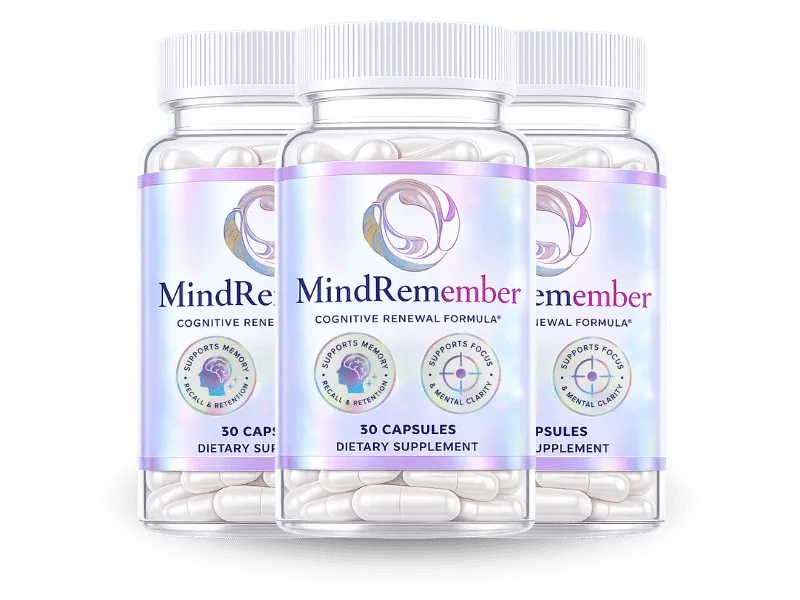
The only way to know whether any brain supplement delivers an ingredient at its studied dose is to see the number. MindRemember publishes all seven of its actives with a stated amount each — and we compare every one against the research, including where it falls short.
See the Official StoreRegular magnesium versus threonate: which do you actually need?
This is where a lot of money gets wasted in both directions. If your goal is to correct a general magnesium shortfall — common in modern diets — and to support sleep, mood and muscle function, you do not need the threonate form at all. An ordinary well-absorbed magnesium such as glycinate or citrate does that job for a fraction of the price, and taking premium threonate for a general deficiency is like buying a specialist tool to hammer in a nail. It works, but you overpaid.
The threonate form earns its premium in exactly one scenario: when the goal is brain-specific and cognitive, and you want the form with a mechanism and now a human trial aimed at that outcome. Even then, keep the expectations honest — modest, gradual, strongest in those with the most room to improve. The mistake to avoid is the reverse one: assuming a cheap magnesium oxide capsule will do anything for cognition simply because it also contains magnesium. It will not reach the brain the same way, and for this purpose the form is the product. Magnesium L-threonate is one of several memory ingredients we weigh in our roundup of the best brain supplements for memory in 2026, where it sits alongside citicoline and phosphatidylserine.
Safety, interactions and who should be careful
For most healthy adults, magnesium L-threonate at the studied dose is well tolerated, and the elemental magnesium load is modest. The most common complaint is digestive — loose stools or stomach upset — and it is almost always a signal that the dose is too high rather than a reason to abandon the ingredient. Because magnesium is cleared by the kidneys, anyone with reduced kidney function should not take a magnesium supplement without medical advice, as they cannot excrete excess normally. Magnesium can also interact with certain medicines, including some antibiotics and osteoporosis drugs, by affecting their absorption — usually managed by separating the timing, but worth checking with a pharmacist. As always, the honest safety rule for any nootropic is to ask two questions before starting: is it well studied in humans, and does it interact with anything I already take? We cover that framework across ingredients in our overview of what nootropics are and how they work.
The form is the product. For general health, cheap magnesium is fine; for the brain, you are paying for delivery, not for the mineral.
How this fits a formula like MindRemember — honestly
Because we cover MindRemember, the fair thing is to tell you plainly where it stands on this ingredient: MindRemember does not contain magnesium L-threonate. Its seven actives are St John's wort, phosphatidylserine, bacopa monnieri, ginkgo biloba, L-glutamine, N-acetyl L-carnitine and alpha-GPC, and none of them is a magnesium compound. So if magnesium L-threonate specifically is what you are after, this formula is not the way to get it, and we would rather say so than imply otherwise.
What MindRemember does share with the good version of this ingredient is the thing this whole article is really about: doses you can actually read. Its phosphatidylserine is present at 125 mg, inside the range human trials have used — the same standard we just applied to threonate, applied to a different ingredient. Its alpha-GPC, by contrast, sits at a token 5 mg, an example of the under-dosing this article warns you to watch for. And its largest ingredient, St John's wort, carries a serious interaction profile that has nothing to do with magnesium but everything to do with whether the product is right for you. The reason to look at the label is not that it contains this month's trending mineral; it is that it shows its numbers, which is exactly the habit that lets you evaluate magnesium L-threonate — or anything else — on the evidence instead of the marketing.
See every dose, and every shortfall
All seven published amounts against the trial doses they are measured against, the St John's wort interaction warning in full, and today's official-store pricing — on one page, with nothing hidden inside a blend.
Order NowRelated reading
Frequently asked questions
What are the benefits of magnesium L-threonate for memory?
Magnesium L-threonate is the magnesium form best able to raise magnesium levels inside the brain, where the mineral supports synaptic density and the plasticity underlying learning and memory. In a 2026 randomised trial, older adults taking 2,000 mg per day for six weeks improved their cognitive-age estimates by roughly 7.5 years versus placebo. The honest framing is that this is a single, promising trial in older adults, the effects are modest, and it is not a treatment for any disease. It works best in people whose brain magnesium status has room to improve, and it takes weeks rather than days to show.
How much magnesium L-threonate should I take daily?
The dose used in human research is typically 1,500 to 2,000 mg of magnesium L-threonate compound per day, which supplies roughly 144 mg of elemental magnesium. That distinction matters: the large number on the label is the whole compound, and only a fraction of it is actual magnesium. Larger doses are usually split across the day, and the evening dose is taken before bed. Staying within the studied range is sensible, because going higher tends to bring digestive upset rather than extra benefit, and total magnesium from all sources should be kept in mind.
Is magnesium L-threonate better than regular magnesium for the brain?
For brain-specific goals, plausibly yes, because it is the form shown to raise magnesium concentrations in the brain rather than mainly in the body. Common, cheaper forms such as magnesium oxide and citrate correct a general magnesium deficiency and help with things like sleep and muscle function, but they are not designed to reach the brain the way L-threonate is. That said, if your goal is simply to fix a general magnesium shortfall, an ordinary well-absorbed form is far cheaper and perfectly adequate. Threonate earns its premium only for the specific cognitive rationale.
How long before magnesium L-threonate improves memory?
Weeks, not days. The 2026 trial that reported cognitive-age improvements ran for six weeks of daily use, and mechanisms involving synaptic density and brain magnesium status are inherently gradual rather than acute. You should not expect to feel a dose the way you feel caffeine. A reasonable trial is eight to twelve weeks of consistent daily use at the studied amount before deciding whether it does anything for you, and it should be judged on steady, everyday recall rather than any immediate sensation.